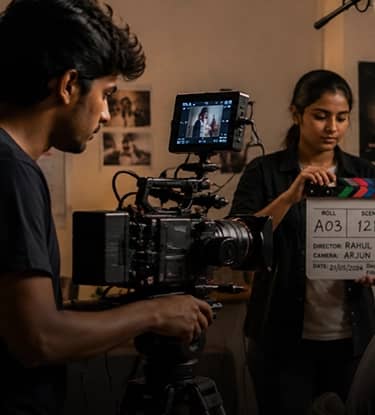
ABOUT THE B.A. (Cinema)
The B.A. (Cinema) program is a 3-year integrated degree that trains students across the complete filmmaking process—from storytelling and production to post-production and screen exhibition, with an additional year for advanced research and learning. Students learn through hands-on studio work, live film projects, and industry-led workshops that build both creative and technical skills.
AAFT offers professional film and TV studios, editing and sound labs, VFX facilities, and an in-house production house where students create films, web content, and digital projects. Industry mentorship, international collaborations, and film festivals give students strong exposure and career visibility. The program includes 120 credits, with an honors option of 160 credits for advanced specialization. The curriculum includes—
- History & Foundations of Cinema
- Cinematography & Visual Storytelling
- Editing & Post-Production
- Sound & Music Design
- OTT & Digital Content Creation
The pedagogy is built across six learning pillars:
- Experiential Learning
- Mentorship Model
- Peer Review Culture
- Industry Integration
- Project-Based Learning
- Hands-on Practice
Duration:
3 years B.A. (Cinema)
4 years B.A. (Cinema with Hons.) (Optional)
Number of Specialisations: 4
Credits:
- 120 for B.A. (Cinema)
- 160 for B.A. (Cinema) (Hons./Hons. with research)
Start Date: August 2026
Learning Outcomes
- Master cinematography techniques, including camera operation and lighting design.
- Develop advanced editing skills using tools like Adobe Premiere Pro and Avid Media Composer.
- Craft compelling stories through script analysis, directing actors, and applying acting techniques.
- Create OTT and digital-first content tailored for modern audiences.
- Collaborate effectively in teams, managing projects from concept to completion.
- Plan and execute productions with budgeting, scheduling, and distribution strategies.
- Apply entrepreneurial skills to launch independent projects or work confidently in professional film environments.
Assessments
The B.A. (Cinema) course at AAFT follows a comprehensive assessment system to evaluate students throughout the course. Assessments are designed to nurture both creativity and professional skills. Students engage in practical projects like short films, editing, and sound design, while written and oral exams explore film theory, history, and concepts. Industry simulations give hands-on experience with pitching, budgeting, and client briefs, culminating in a Capstone Showcase where final films or web content are presented to a faculty-student jury. This approach ultimately helps blend imagination with discipline, helping execute the vision into reality.
Certifications Offered
- Certificates for master classes and internships (CANON and Panasonic)
KEY TAKEAWAYS

- Hands-on training with 4K/6K workflows for professional filmmaking.
- 100+ seater for screenings, peer reviews, and critique sessions.
- Prospect to master advanced audio production.
- 1:1 guidance from experienced faculty to build skills effectively.
- Collaborations with production houses and OTT platforms for real-world exposure.
- Integration of regional cinema, folk traditions, and modern media storytelling unique to Central India.
Student Projects
All our cinema degree courses are specially designed to help students come out as skilled cine artists, break inhibitions, and develop the confidence to present their ideas & work. As a part of the bachelor cinema degree as well as the PG degree, students get to work on different motion picture formats. This also helps them to find their niche and develop skills and future roadmap accordingly.
Photo Story
Continuity Films
Mise En Scene
Ad Film
Fiction Film
Short Film


Project's
Video

SYLLABUS
Throughout the course, the students are provided with following projects
Semester I
- Basics of Direction and Screenplay Writing
2. Basics of Acting
3. Basics of Cine-Still Photography
4. GE - 1 - Annexure - I (A)
5. AEC - Communicative English
6. VAC 1 - Annexure - II
Semester II
- Basics of Video Editing
2. Basics of Cinematography
3. Film Studies I
4. GE 2 - Annexure - I (B)
5. AEC - Academic Writing
6. SEC - Annexure - III
Semester III
- Basics of Sound Editing
2. Production Management
3. Creative Writing
4. Acting for Film & TV (I)
5. Post Production (I)
6. Cinematography (I) - Direction & Screenplay Writing (I)
- AEC - Professional Communication
- VAC - Annexure - II
Semester IV
- Fundamental of Advertising for Digital Media
2. Storyboarding
3. Media Ethics & Law
4. Acting for Film & TV (II)
5. Post Production (II) - Cinematography (II)
- Direction & Screenplay Writing (II)
- AEC - Soft Skills Training
- Annexure - III
Semester V
- Production Design
2. Uniderstanding Non-Fiction
3. Society & Film
4. Acting for Film & TV (III)
5. Post Production (III)
6. Cinematography (III) - Direction & Screenplay Writing (III)
- Casting for TV & Films
- Film Studies II
- Film Project Report
Semester VI
- Da Vinci for Film Editing
2. Music Production
3. Film Appreciation
4. Graduation Film
5. Documentary Film
6. Play Back Project - VAC - Annexure - II
- Annexure - III
- Internship
Semester I
- Basics of Direction and Screenplay Writing
2. Basics of Acting
3. Basics of Cine-Still Photography
4. GE - 1 - Annexure - I (A)
5. AEC - Communicative English
6. VAC 1 - Annexure - II
Semester II
- Basics of Video Editing
2. Basics of Cinematography
3. Film Studies I
4. GE 2 - Annexure - I (B)
5. AEC - Academic Writing
6. SEC - Annexure - III
Semester III
- Basics of Sound Editing
2. Production Management
3. Creative Writing
4. Acting for Film & TV (I)
5. Post Production (I)
6. Cinematography (I) - Direction & Screenplay Writing (I)
- AEC - Professional Communication
- VAC - Annexure - II
Semester IV
- Fundamental of Advertising for Digital Media
2. Storyboarding
3. Media Ethics & Law
4. Acting for Film & TV (II)
5. Post Production (II) - Cinematography (II)
- Direction & Screenplay Writing (II)
- AEC - Soft Skills Training
- Annexure - III
Semester V
- Production Design
2. Uniderstanding Non-Fiction
3. Society & Film
4. Acting for Film & TV (III)
5. Post Production (III)
6. Cinematography (III) - Direction & Screenplay Writing (III)
- Casting for TV & Films
- Film Studies II
- Film Project Report
Semester VI
- Da Vinci for Film Editing
2. Music Production
3. Film Appreciation
4. Graduation Film
5. Documentary Film
6. Play Back Project - VAC - Annexure - II
- Annexure - III
- Internship
B.A (Honours)
Semester VII
- Film Analysis
2. Advertisement Film
3. Censorship & Cinematography Act
4. Indian Dance Form
5. MOOC/ Swayam NPTEL - Indian Music Forms
- Mobile Film Making
- Podcast Production
- Filmmaking & AI tools
Semester VIII
- Indian Art Cinema
2. Importance of Research in Filmmaking
3. Set Dressing for Cinema
4. Content Acquisition and Marketing of Cinema
5. Promo Video Making
B.A. (Honors with Research)
Semester VIII
- Indian Art Cinema
- Research Methodology for TV & Films
3. Dissertation
Program Fee Structure
Explore detailed tuition fees, installment-wise breakdown, scholarships and flexible EMI options.
| Course | Duration | Admission | 1st Installment | 2nd Installment | 3rd Installment | 4th Installment | 5th Installment | 6th Installment | 7th Installment | 8th Installment | 9th Installment | 10th Installment | Total |
|---|---|---|---|---|---|---|---|---|---|---|---|---|---|
| B.A. (Cinema) | 3 Year | 30,000 | 107,000 | 107,000 | 107,000 | 107,000 | 107,000 | 107,000 | - | - | - | - | 672,000 |
| B.A. (Honors) (Cinema) | 4 Year | 30,000 | 107,000 | 107,000 | 107,000 | 107,000 | 107,000 | 107,000 | 107,000 | 107,000 | - | - | 886,000 |
Important Notes

JOB ROLES/ CAREER PROSPECTS
The course will prepare you for a wide variety of roles in Design field such as
Software Proficiency
The B.A. (Cinema) program introduces students to essential digital tools used in contemporary filmmaking and media production. Students work with industry-relevant technologies to support pre-production planning, cinematography workflows, editing and post-production, sound design, visual storytelling, portfolio development, and professional presentation.
Tools
- Adobe Premiere Pro, DaVinci Resolve Studio, After Effects
- Avid Pro Tools
- RED Helium, DJI Drone systems.
- Final Draft 13 & 13 Pro for iOS

PLACEMENT TIE-UPS






GET TRAINED BY THE WORLD-CLASS FACULTY
We boast a team of highly qualified professors who are acclaimed practitioners in their respective industries. The team is dedicated to help students prepare themselves for a successful career and life through their enriched insights and experience.

Mr. Ashok Bairagi
Head of Department HOD
Mr. Birju Rajak
Assistant Professor SOC
Mr. Chandan Singh
Assistant Professor SOC
Mr. Mahendra Rao Sadanande
Assistant Professor SOC
Mr. Pritesh Pandey
Assistant Professor SOC
Mr. Santosh Swarnakar
Dean - Academic SOCOUR INFRASTRUCTURE
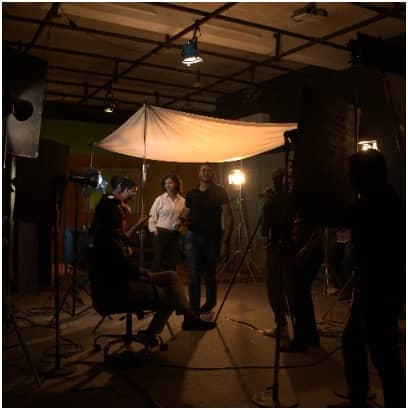
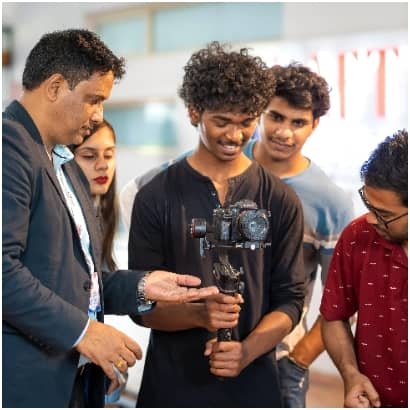
Our state-of-the-art infrastructure boasts industry-relevant advanced studios, labs, high-end equipment, the latest I-Macs and windows systems with relevant software, etc., to ensure that students get a first-hand understanding of industry concepts and work.


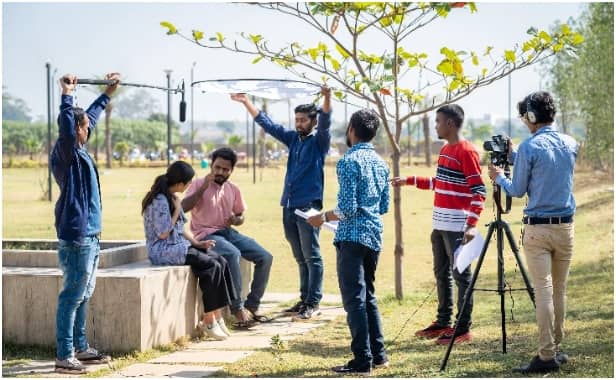
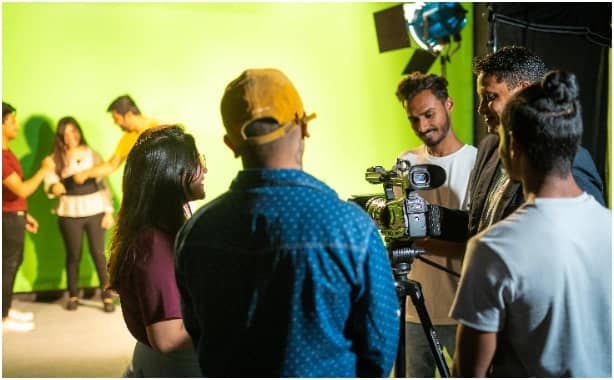
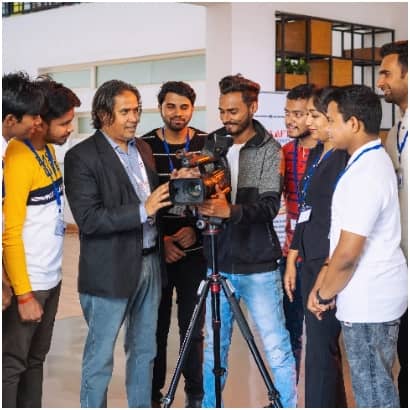
OUR EVENTS
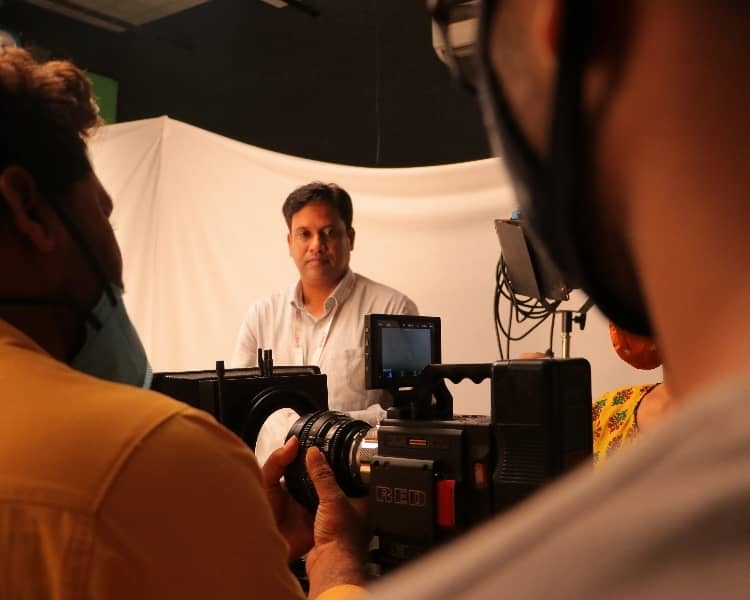
Red Camera Workshop

Nukkad Natak Smart Rajya
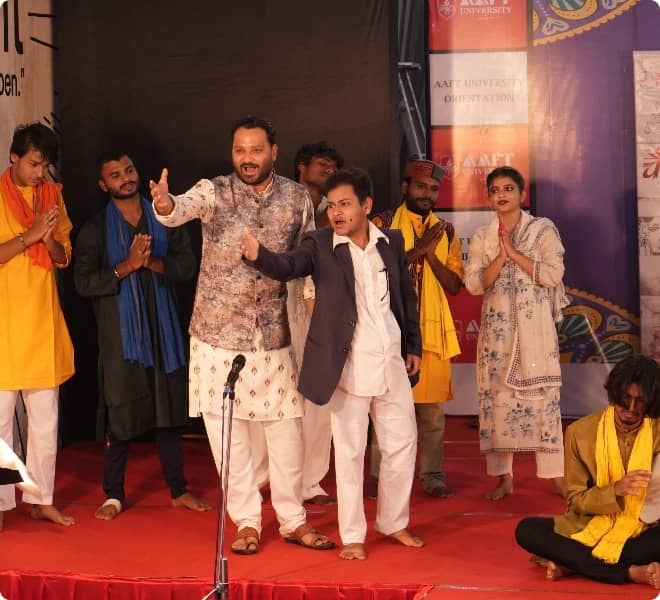
Theatre Production: Chaninpur Ki Dastan
START YOUR JOURNEY AT AAFT
Apply
Login to your application page to start your application and reserve your place in the batch of 2026
Enquire NowConnect
If you would like to speak to a admission counsellor, please connect with us on WhatsApp
Talk NowBrochure
Download our latest prospectus for a detailed look at our programme offerings.
FAQs
Throughout the course, the students are provided with following information
The B.A. (Cinema) at AAFT follows a practice-led, studio-based learning approach that blends cinematic storytelling with technical training and industry exposure. Students work on hands-on film projects, live productions, screenings, and critique sessions, preparing them for contemporary careers in film, OTT, and digital media.
The B.A. (Cinema) is a 3-year undergraduate degree with an optional 1-year extension for Honours or Honours with Research. The program provides a comprehensive blend of theory, practical application, and industry readiness.
Graduates can pursue roles such as Assistant Directors, Cinematographers, Editors, Sound Designers, Actors, Screenwriters, Content Creators, and Production Executives across film studios, OTT platforms, advertising agencies, and digital media companies. Many also explore independent filmmaking and freelance careers.
Yes. The program includes live film projects, internships, masterclasses, workshops, set visits, and interactions with industry professionals to provide students with real-world exposure and a practical understanding of filmmaking workflows.
AAFT offers professional film studios, shooting floors, editing suites, sound recording and mixing studios, a 100+ seater preview theatre, camera and lighting equipment, and access to industry-standard software to support production, post-production, and portfolio development.
To apply for the Bachelor of Arts (Cinema) program at AAFT, applicants should have completed 10+2 or an equivalent qualification from a recognized board in any stream.
Yes. Admission to the B.A. (Cinema) program includes the AAFT Global Entrance Test (GET), followed by a personal interview.
AAFT offers EMI options and flexible fee payment plans for the B.A. (Cinema) program, making it more accessible for students. Applicants can connect with the admissions team for detailed information about available payment options.
Admissions are typically open for upcoming academic sessions. Students can apply through the AAFT application portal or connect with an admissions counselor via WhatsApp for application timelines, eligibility details, and guidance.
The B.A. (Cinema) program places strong emphasis on hands-on, practice-led learning. A significant portion of assessment is driven by practical work such as film productions, editing assignments, sound design projects, live shoots, and portfolio development. These are supported by theory subjects covering film language, storytelling, cinema history, aesthetics, and professional practices.
Yes. AAFT supports Cinema students through mentorship, workshops, film clubs, screenings, festivals, cultural events, and career guidance, encouraging holistic creative and personal development beyond the classroom.
AAFT School of Cinema focuses on nurturing creative vision while building strong technical and professional skills from the ground up. The cinema courses provide an immersive learning environment with industry exposure, mentorship, and project-based learning, while maintaining a student-centric approach.